

Skill

If I haven’t shouted on top of enough rooftops already, I finally learnt to swim in 2025. In short, I had to unlearn what I knew (or thought I knew?) and then I was humbled about how hard it is before I finally figured it out. By no means am I a pro swimmer but I thought swimming was a cool skill to flaunt when you summer in Europe. Or that’s what social media made me believe. Then I saw one of my favourite Indian comics, Biswa’s reel about how learning to swim is the most useless skill. I was both amused and outraged.
Almost immediately, I went down a rabbit hole to see what would constitute skills that are important and useful. And I decided to crowdsource this as a response because I wanted to see how the people in my life (thank you, you know who you are) were thinking! No surprises that the common answer was AI. Society group-think is pretty strong. On some further questioning here are some of the skills that came up in no order of importance: Readiness to adapt, Mental agility, Training your mind to focus, Self control and discipline, Patience, Cyber crime awareness, Cooking, Passion for learning, Navigating ambiguity, Breaking down complex problems, Developing an appreciation for inconvenience (my favourite), Critical thinking, Listening, Content creation, Self promotion, Being able to disassociate, Developing a thick skin among many others. Overall it was a mix of work and life skills based on which chapter each one of them was at. I could largely bucket this list of skills into two parts. The first bucket is relevant to how to get a job or keep a job or get ahead in a job. The rat race is very real! The other bucket felt a bit about surviving this rat race. In a way the skills all seemed like a yin-yang; not complementary but there is an interesting tension. Because survival in today’s world is a combination of being able to hold your economic value while also keeping yourself afloat as a human. Don’t we all love a good contradiction? And as far as I see it, one could not exist without the other!

The more obvious question that dawned upon me while I was having these conversations was how on earth is any one person supposed to have all of these skills? Is it even possible to be the so-called Jack(/Jill) of all trades? If you decide not to pursue it all, then how do you decide what is more important to you than another? The most common approach here is to alternate. Chase work skills until you burn out, then frantically tend to life skills until the economic anxiety kicks in. Then switch back. But don’t you think that to truly run in this race, you need to be able to use both of your legs to run; not just one or the other?
Interestingly the rise of the individual contributor with multitude of skills is a modern day phenomenon. If we turn the clock back in time, society operated as a unit and so collective skills were what got us through time. Be it on the grasslands or in the conquests of war between kingdoms. Can you imagine if only two men went to war? Well, if it was a war of words, maybe we can call it a debate, but I digress. The simple truth was that people knew they didn’t have to do everything. They relied on each other and trusted that collective skills would be the way ahead. Community was everything. Think about the phrase – ‘It takes a village to raise a child’ and you can see it comes from the simple truth that a single mom could not do it all. Humans have always relied on being social animals. Our capacity to engage with each other is a skill that has helped us evolve and get ahead in the animal kingdom far more than anything else.
So the question is how did this economic value shift from ‘many people with individual skills as a unit’ to ‘a single person with many skills’?
The skill acquisition trap
Skills were born as a survival mechanism to live on the planet. But as humans occupy more and more of the planet and expand our own footprint; we have learnt to associate skills with economic value. Every new skill is added to an ever expanding list of skills existing in society and these go up and down like the stock market depending on what is more important at any time. In the medieval ages, bakers were considered the most valuable in society because everybody wanted bread and there were only a few with the skill. With both the industrial revolution and the technological advancement of ovens in every house; bread became a commodity and anybody can bake their own bread. So the value of baking bread as a skill has dramatically come down in that list. So if bakers were rich in the past (we know they were because if you toured brussels and saw the gilded houses; you know bakers had one too!); they probably are not as rich now. So how do bakers keep themselves relevant for economic value today? They learn new skills, of course!
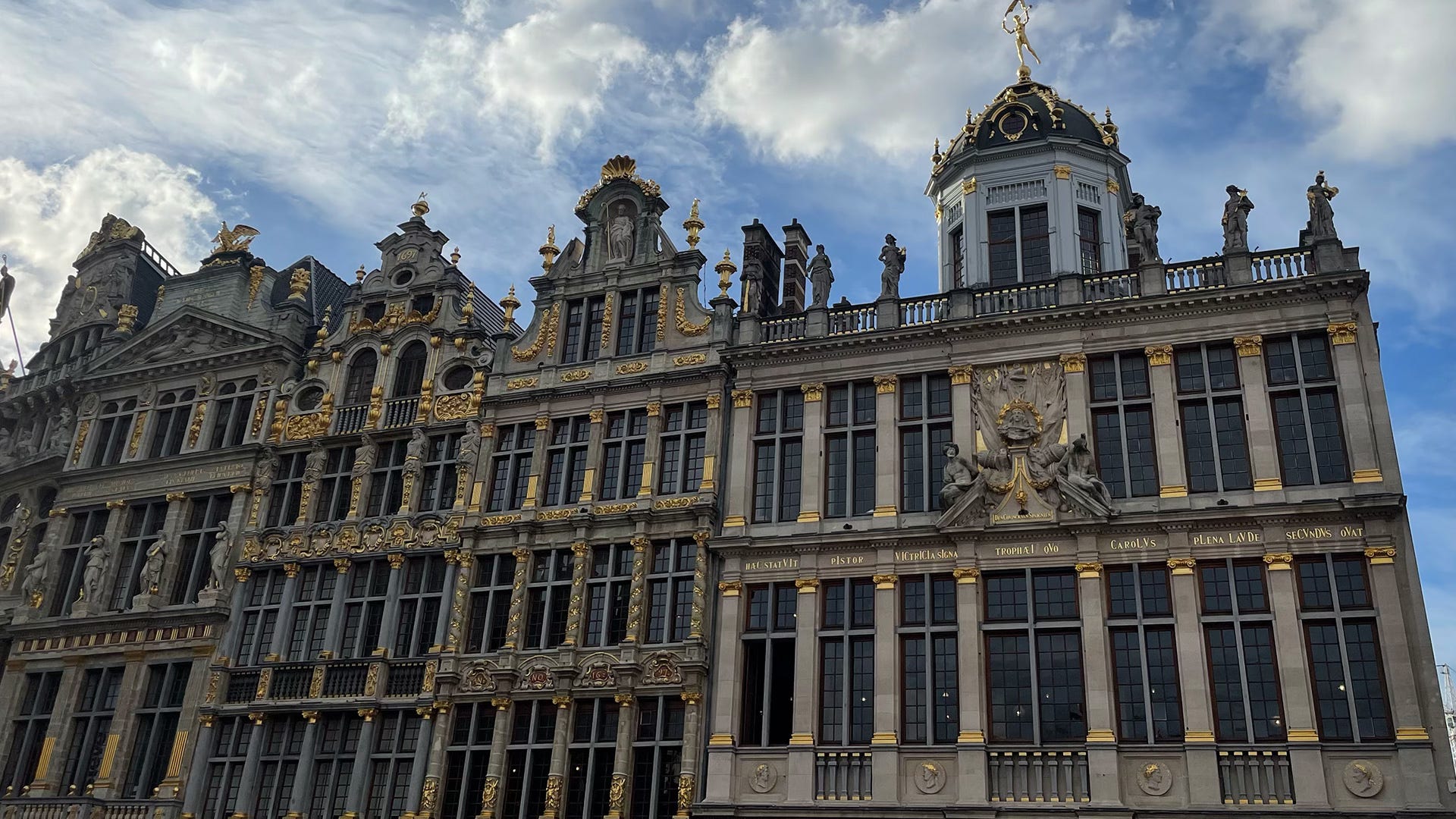
As a society, we’ve looked at education as the way to pick up a new skill. Bakers went to learn new things in the industrial era! Some turned their bread making into becoming bread merchants or if they had the capital into an industrial business. And some turned to leaving the skill altogether to do something new. Through this race to keep up one’s economic value, we have now all built a set of ‘transferrable skills’ across jobs. Ever heard your boss, your coach or your family ask you to pick up transferable skills? Maybe it is communication or it is being able to manage teams or sometimes it is just ‘get the job done’! Through the industrial age, people acquired various skills that were relevant to industries and when the technological boom arrived; a lot of these skills slowly vanished; like telegraphists or typists or even travelling salesmen! People either individually picked up these smaller skills adding to their repertoire of skills like one adds books to a library or they transformed into different skills like selling online.
I remember as a kid, parents in school would discuss what all their kids were good at. It was perhaps all parents’ favourite activity – to show off their offspring. A marker of their legacy, afterall. The longer the list, the more prized as a kid you were. The headgirl/ headboy of a school was simply someone who was not only academically amazing but also good at sport and extracurricular activities. Now-a-days I see kids spend a lot of their after school time learning more things to make their career advancement better. At a networking event recently, I met an 18 year old expat who was trying to find his own clients for the management consultancy he was interning at. I felt deeply sad that he was already trying to get ahead in the game. To be fair, I don’t blame him. Doing something gives us the illusion of control. This stems from the dopamine rewards our brain gets through learning. To continue with this illusion, we all seem to be acquiring/honing skills all the time without a thought! If knowing and honing was not enough, telling the world about it has become more important – LinkedIn has a whole section dedicated to it so everyone who knows you and doesn’t know you can know this about you!
In the advent of skill advancement as a way up in society and in the economic ladder; there are more summer programs dedicated to learning than ever before. Ever since Covid and the online learning boom, studying part time while you have a full time job to have more skills in your resume seems to be how everyone seems to be going. Enrollment in online learning doubled in 2020, then jumped another 32% to 189 million the following year. I too have been guilty of doing some online courses in this spectrum. But the question remains if these skills are actually relevant? Or is it just cheap dopamine? Or just another way to tell yourself that you are doing things to stay ahead? Asking for a friend, of course.
Gatekeeping and Power
The race gets more absurd as you realise that skills have become equivalent to your status in society and of how much economic power you hold. Hard skills like being good at computer science or like engineering or motion design are super valuable today. But they are all on what I would call a single ladder. We are at this point not climbing one but many ladders at the same time. So unless you also have the ability to negotiate and communicate effectively (an independent ladder), even the most talented would be lost. History has taught us how being a great orator can make you the most powerful person in the room. So while your hard skills can be good or the best even, telling a good story (part of your soft skills) is how you actually get ahead!
Unfortunately or fortunately, not only have we been in the race to climb ladders since the time we were young, we’ve been in the race since the time our ancestral lineage has been around. So your place in this race was decided long before you were born whether you like it or not. In modern society, it is termed as ‘privilege’. Those with greater access have been able to climb multiple ladders at one go. It could be through the opening of doors or through access to education or through being able to be at the right places at the right time. Ancestrally a lot of these gates were only for the privileged few and they amassed an immense amount of wealth. Over a period of time, the gates moved around as greater technological advancement meant more people could go up the ladder. As many gates open up, new gates are formed. In the book Supremacy, Parmy Olsen (highly recommend reading!) writes about Google executives having a fear of releasing its AI models to the public because it would impact its search business which pretty much powered the whole company. So, OpenAI used the research papers from Google and gave the world ChatGPT! So as you can see, while one gate opened to the public, a new closed gate was formed.
While we’re all frantically learning and pulling ourselves up to speed, gatekeeping allows the people in power to decide which skills are important. I keep returning to the Ted talk by Chimamanda Ngozi Adichie where she talks about the danger of a single story, where she says, Power is the ability not just to tell the story of another person, but to make it the definitive story of that person. After all, as we have seen before, history is written by the victors!
The end of an era
I believe we are at an interesting point of inflection in society. With the rise of AI tools, AI bots and AI apps, it seems like our economic future is either doomed or going to be that of abundance. With 17 times as much investment into AI than any other technology in the world, the question of it being a bubble is coming forth quite strongly. We all know group-think on AI is strong so nobody wants to be a naysayer and shut the gate for themselves. The price to pay is perhaps too high. So we are all adopting AI skills. I mean you’d be dead in the job market without AI on your resume. The recruiters are all AI now, so we know they like to see you using them well.
While we are all in this race to upskill, the market is flooded with more AI tools than people. Everyone can be and has become an entrepreneur. We perhaps have as many bots as people. Maybe this is the radical abundance Demis Hassabis refers to? But more importantly, if technological advancement in AI is designed for the optimisation of people as a resource, why is anybody upskilling themselves? What skill can you gain that a tool will not have? I mean social media is a great example of this as we thought being a creator meant a lot of work but now Sora can do a lot of that for you. You can outsource even your social media performance and despite the haters, it won’t be long before we all do use it. FOMO is real after all.
What is the point of ‘skills’ if we are all going to be pitted against some AI tool and know that we are going to lose? As far as I see it, it is the end of an era.
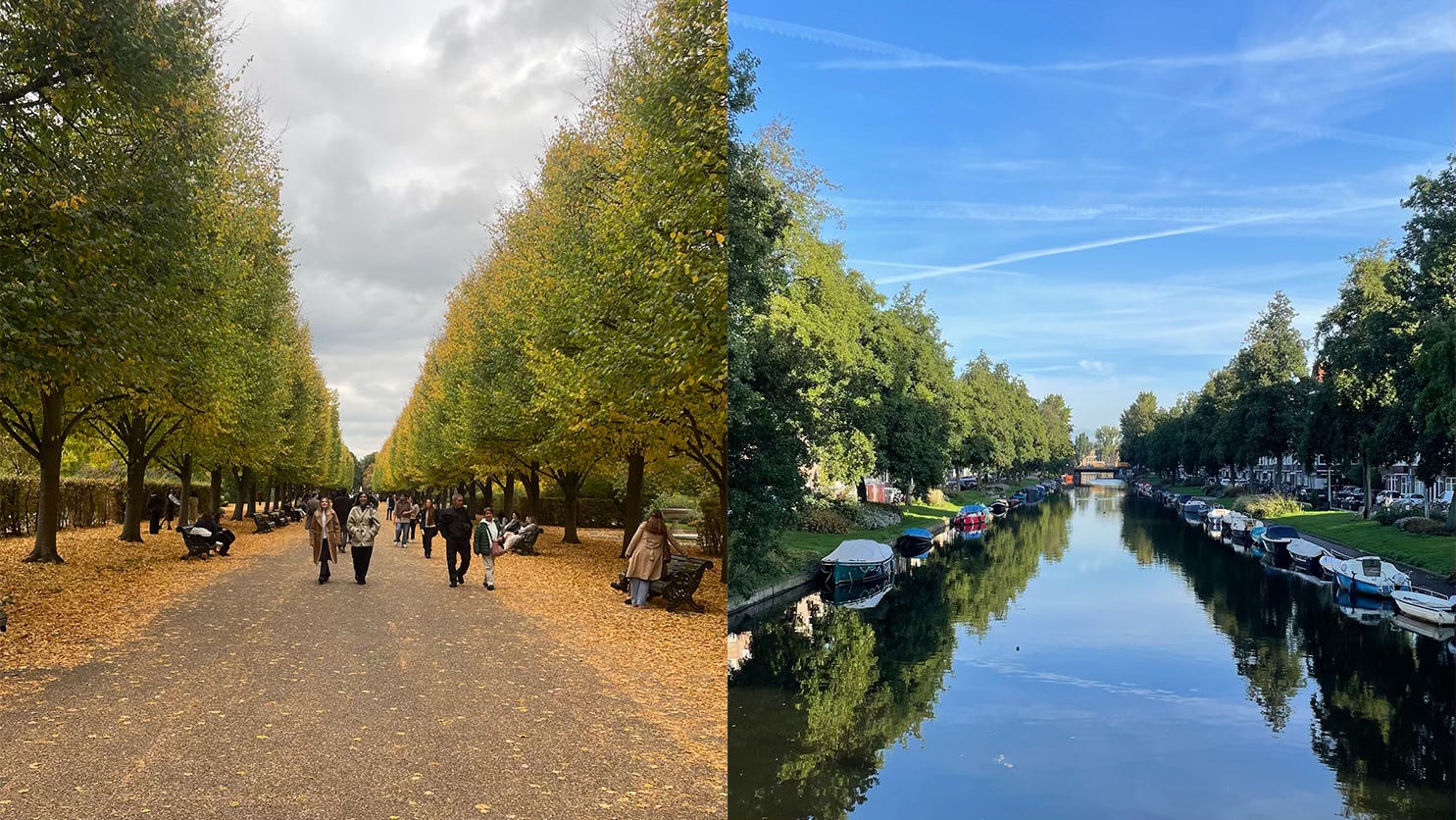
Maybe we needed this? I believe that the AI crisis isn’t creating a new problem, it’s just revealing the old lie: that our worth was never tied to our productivity in the first place. We have spent centuries believing our value came from what we could do and what we could produce, optimize, trade. We continued to do more and more and more. But how much more is enough? We built our identities by what we could do and what we have learnt. So now that the wall is collapsing – what do you get in return? Permission. Permission to live your life the way you want. Permission to be human in ways that have nothing to do with being useful. I’m bullish on AGI if it can give me that. A world where the bots do the laundry and make me look good at my job, so that I can tend to my garden.
Now that your skills need not be tied to your economic worth in the future, what would you like to do? Lie down in the park on a Monday, maybe?
Enjoyed reading this and going back and forth in history to present and plausible future scenarios.
In a world where everyone’s playing catchup and economic growth is directly proportional to ‘hard’ skills, I wonder what is the role of soft skills? Did you find any anecdotes on this as well?
Such an interesting read! I studied the impact of the Industrial Revolution on gender roles in society. The skills that women were trained to learn were typically indoor skills, which did not generate income, whereas men developed outdoor skills that brought in money and established a hierarchy. Women's skills were often deemed easy and not particularly useful, a common misconception that persists even today. The skill economy really defined everything in our culture.
If my skills weren't tied to my economic growth, I'd love to develop more skills in creative arenas!